Read more in the June 13 edition of Invert Insights.
A new report by Earth Security, a strategic investment research and advisory company, examines how investing in blue carbon can be a catalyst for climate, community, and capital resilience. Unlocking the Blue Carbon Premium takes a look at buying, from procurement to brand positioning, and offers a strategic roadmap for those ready to invest in blue carbon not just as an offset but as a catalyst for climate, community, and capital resilience.
The report shares how blue carbon credits can be elevated in value by recognizing and pricing for their full environmental, social, and economic benefits, not just their carbon sequestration.
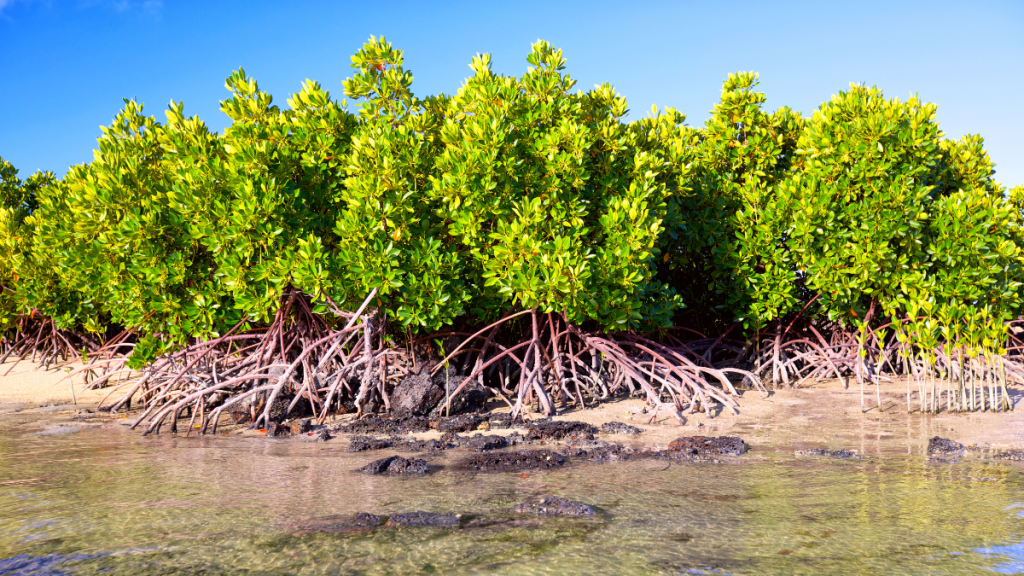
Blue carbon ecosystems, such as mangroves, seagrasses, and tidal marshes, are coastal and marine habitats that capture and store large amounts of carbon dioxide from the atmosphere, helping to mitigate climate change. Current studies show that these ecosystems sequester carbon at a rate ten times greater than mature tropical forests while also providing co-benefits like safeguarding infrastructure, protecting biodiversity, and improving the livelihoods of those living in coastal communities. Despite their high carbon sequestration and opportunity for meaningful community engagement, the projects can be expensive and complex to develop and are rarely fairly priced considering their non-carbon co-benefits like conservation of biodiversity, flood protection, or job creation.
Blue carbon credits are among the most valuable nature-based credits in the voluntary carbon market. On average, blue carbon credit prices have ranged from $11.58 in 2022 to $8.33 in 2023, consistently above the broader VCM average of $7.37 in 2022 to $6.53 in 2023. Based on updated data for 2025, we can see the prices have increased to an average of $29.72, representing a 257% increase. Further to this, projects with verified co-benefits like meeting SDGs or being focused on community development or biodiversity can achieve 15%–40% higher prices. As the report references, credits with SDG links commanded an 86% premium and projects with measurable community benefits earned 37% more per credit.
Even so, blue carbon made up just 0.38 MtCO₂e out of 110.8 MtCO₂e transacted in 2023, representing a small share of the VCM. The report shares that despite the numerous measurable climate benefits of blue carbon projects, there are still several barriers affecting their potential, including high development costs, complex operating conditions and fragmented land ownership structures. To remedy this, establishing clear benchmarks and communicating impact is essential for price transparency and valuation.
The report introduces a framework for buying high-integrity blue carbon credits based on project integrity, impact, and influence. As with any other carbon credit, buyers should look for credits that meet high-quality standards, like being certified by a registry, satisfying SDG commitments in a measurable way, or looking for projects that offer equitable benefit-sharing with local communities and landowners. Buyers are encouraged to integrate blue carbon into their ESG narrative to help enhance brand credibility and stakeholder trust. Buyers are also encouraged to engage early with developers to shape projects and to consider committing to multi-year offtakes to support project viability and secure price stability.
Invert Insights.
💡 The report highlights that corporate buyers increasingly want high-quality, co-benefit-rich credits and are willing to pay premiums for them. There is an opportunity to move blue carbon from niche to premium by not just focusing on carbon sequestration, but valuing ecosystem integrity and community stewardship. With the right frameworks and market signals, blue carbon can set a new standard for climate and nature-positive investment.
💡 When investing in blue carbon projects, it’s important to consider a variety of metrics beyond carbon sequestration, including how the project impacts coastal resilience, the livelihoods of the local communities, and positive impacts on biodiversity. Buyers will also want to look for projects that are in alignment with ICVCM Core Carbon Principles, VCMI Claims Code, or Oxford Principles, and with co-benefits that have been certified by SDG-linked frameworks like SD VISta, Gold Standard SDG Impact Tools, or Plan Vivo co-benefit indicators.
💡 Working with a reputable partner who knows the nuances of successful blue carbon projects is critical to ensure brand safety and integrity. Book a discovery call with Invert’s team of Blue Carbon project experts to learn more.